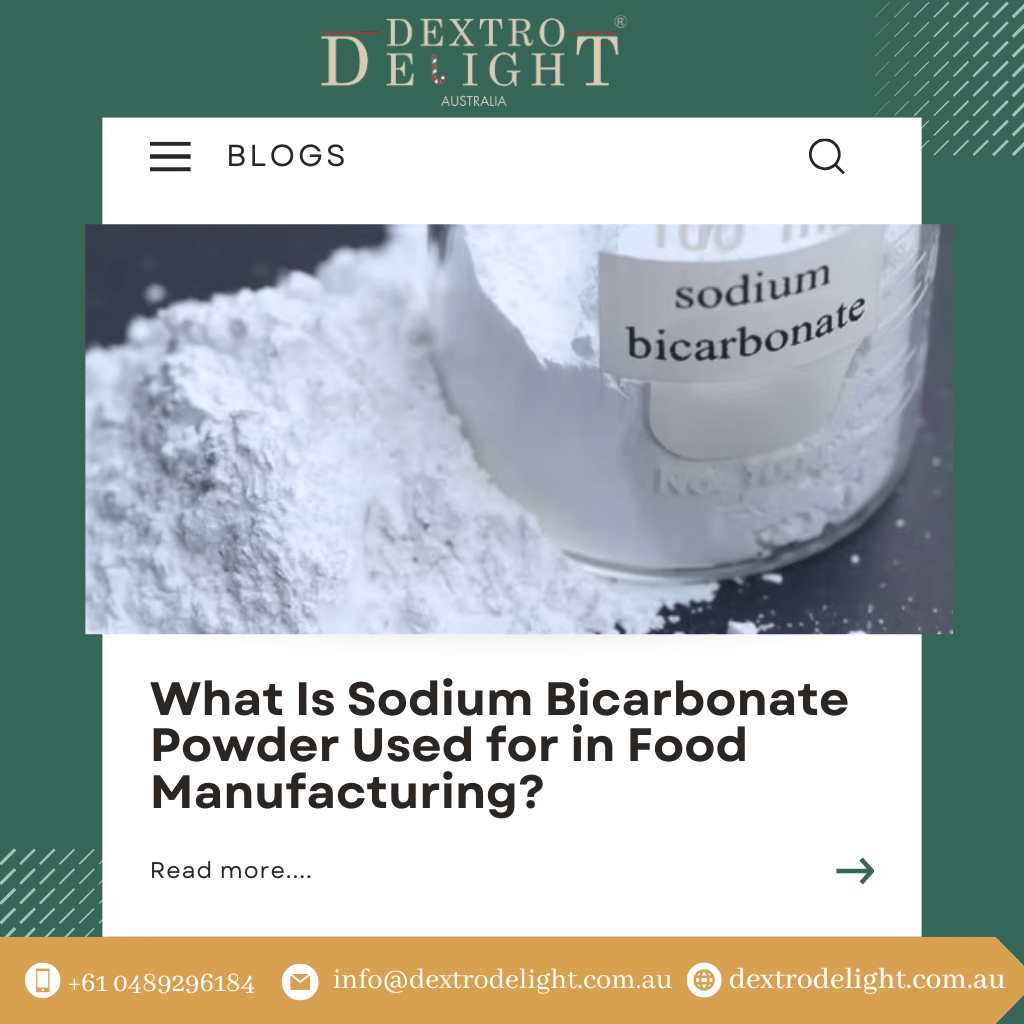
Sodium bicarbonate powder shows up everywhere in food manufacturing. It acts as a leavening agent, balances pH level, enhances texture, and even lends a hand with keeping foods fresh. In Australia, food producers lean on it because it’s dependable, affordable, regulatory-approved and does a whole bunch of jobs at once.
Here’s the science behind it: sodium bicarbonate is a white, crystalline powder (the chemical name is NaHCO₃) that reacts with acids to make carbon dioxide gas.
That fizz is exactly what you want in baking, drinks, dairy, and all sorts of processed foods.
Understanding the Chemistry Behind Its Function
Sodium bicarbonate is mildly alkaline. When it reacts with acidic components such as citric acid, vinegar, buttermilk, or cream of tartar, carbon dioxide gas is released. In baked products, this gas becomes trapped in the batter or dough, expanding during heating and creating a light, aerated structure.
Because of this property, Sodium Bicarbonate Powder is widely used in formulations where fast, predictable leavening is required.
According to the U.S. FDA and Food Standards Australia New Zealand (FSANZ), sodium bicarbonate is classified as safe for food use within regulated limits.
Source:
1. Leavening Agent in Commercial Baking
The primary industrial application of sodium bicarbonate remains leavening. It offers:
- Developing volume in cakes, muffins, and quick breads.
- Giving biscuits and crackers that are even crumbly
- Adding crunch to cookies and wafers.
Unlike yeast, which takes its sweet time, baking soda works fast as soon as it hits acid and heat. That’s a big deal for commercial bakeries that don’t have hours to wait. In gluten-free baking, where you’re missing the usual structure, Sodium Bicarbonate Powder helps create the necessary aeration to prevent dense textures.
2. pH Regulation for Stability and Flavour
Nailing the pH makes a big difference for food safety, taste, and shelf life of the product. Sodium bicarbonate steps in to balance out extra acid; it cuts down on sourness and improves mouthfeel.
In Australia, producers use it in all kinds of ways.
- Tomato-based sauces to balance tartness
- Dairy products, such as yoghurt, can help manage protein stability
- Processed vegetables to maintain colour and texture
- Canned foods requiring controlled acidity
Keeping the pH in check ensures that food tastes better. It actually makes food last longer and reduces the risk of protein coagulation in dairy systems.
3. Texture Modification and Tenderisation
Baking soda isn’t only about rising. It changes texture too, by affecting the proteins and fibres. In meat processing, people add just a little during marination to
- Increase tenderness
- Improve moisture retention
- Reduce cooking loss
With vegetables (especially beans and other legumes), sodium bicarbonate helps break down those tough cell walls, so they soften up much faster. This speeds up commercial cooking and keeps ready-meal production moving without a hitch.
4. Role in Food Preservation
Sodium bicarbonate isn’t considered a main preservative, but it still contributes to shelf stability. Its mild alkalinity slows some types of microbes, so you’ll spot it in snacks, baked goods, and certain drinks. You’ll often see it added to:
- Snack foods
- Processed baked goods
- Certain beverage systems
Keeping pH levels in a good range, it reduces spoilage and helps foods stay fresh during distribution.
5. Beverage and Carbonation Applications
Sodium bicarbonate plays a major role in producing drinks, especially when you mix it with something acidic. That reaction produces carbon dioxide, which creates effervescence in:
- Sparkling waters
- Soda beverages
- Effervescent vitamin drinks
The reaction isn’t wild or unpredictable. Manufacturers know exactly how much fizz they’ll get, so they can create the appropriate texture without compromising the taste.
6. Cleaning and Hygiene in Food Facilities
Food-grade sodium bicarbonate is a reliable, non-toxic cleaning agent in production environments. It cuts through grease, tackles smells, and leaves food-contact surfaces clean, all without harsh chemical residues.
For Australian manufacturers focused on food safety and meeting environmental standards, it offers a low-impact cleaning alternative.
Market Demand and Industry Growth
The sodium bicarbonate market is experiencing growth. Back in 2021, it had a market valuation of approximately USD 1.6 billion, and the market is expected to reach USD 2.1 billion by 2028 through annual growth that Research and Markets and Yahoo Finance estimate at approximately 4 %.
The growing demand for baked goods, pharmaceutical products and food processing industries is driving this trend. The pharmaceutical-grade segment alone is expected to reach USD 372 million by 2033, which demonstrates ongoing demand from the industry.
For Australian food producers, this growth means a stable supply and market relevance.
Why Australian Manufacturers Continue to Rely on It?
Here’s why sodium bicarbonate keeps its spot in the product lineup:
- It’s affordable.
- It’s approved by GRAS and FSANZ.
- It works for all sorts of jobs.
- You can store it easily, and it lasts.
- It has a minimal environmental impact (decomposes into water and carbon dioxide)
Ingredient buyers count on its consistency and predictable results, which really matter when you’re planning large-scale production.
Conclusion
Sodium bicarbonate powder acts as a fundamental component in food production. The ingredient produces light-textured baked items, controls acidity levels, adds soft textures and delivers carbonation effects in beverages.
For Australian food businesses seeking reliable supply and consistent quality, partnerships with their established suppliers make all the difference.
Dextro Delight provides premium sodium bicarbonate powder tailored for the food industry. If you’re scaling production or refining formulations, reach out to Dextro Delight.
Related Posts
Signs That Your Food Thickener Needs to Be Replaced

Natural Food Preservatives That Keep Your Food Fresh Without Chemicals