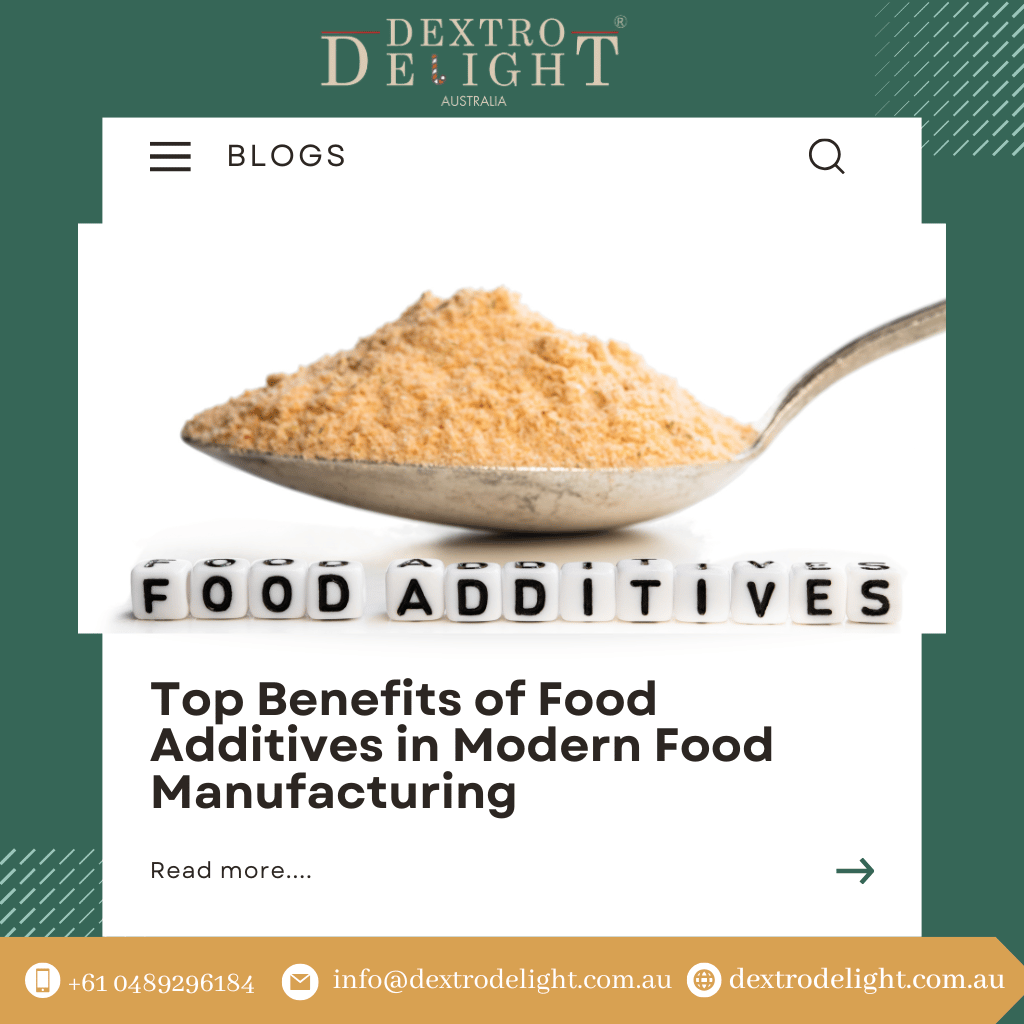
Why Food Additives Are Essential in Today’s Food Industry
When you hear the word additives, you might think of chemicals or something unhealthy—but that’s far from the full picture. In reality, food additives are a crucial part of modern food production. They not only keep food safe and fresh but also enhance texture, flavour, and appearance.
Whether you’re a small food manufacturer or a curious consumer, understanding the benefits of food additives can help you make smarter decisions. For high-quality ingredients from leading food additives suppliers Australia, Dextro Delight offers a wide range of approved solutions.
What Are Food Additives?
Food additives are natural or synthetic substances added to food products to improve or maintain freshness, flavour, texture, and appearance. According to Food Standards Australia New Zealand (FSANZ), all additives used in Australia are carefully evaluated for safety.
Key Benefits of Food Additives
Let’s dive into the most important benefits of food additives in food production:
1. Extended Shelf Life
One of the biggest advantages of food additives is preservation. Antimicrobial agents such as sorbates and benzoates prevent spoilage caused by bacteria, mould, and yeast.
- 🧊 Foods stay fresh longer during storage and transport
- 📦 Ideal for packaged and ready-to-eat meals
- 🗓 Reduces food waste in retail and household settings
Example: Sodium benzoate in beverages or calcium propionate in bread.
2. Enhanced Food Safety
Preservatives like nitrates, sulphites, and lactic acid help prevent contamination and inhibit the growth of harmful microorganisms.
- 🦠 Prevents foodborne illness
- 🛡 Adds an extra layer of microbial protection
- 📋 Supports regulatory compliance and food safety audits
Explore our complete range of food preservatives Australia trusts for effective safety-focused additives.
3. Improved Taste and Flavour
Additives such as flavour enhancers (e.g., monosodium glutamate), sweeteners (e.g., sucralose), and acids (e.g., citric acid) help boost the taste profile.
- 🍭 Better taste experience for consumers
- 🧪 Allows for product differentiation in crowded markets
- 🍽 Maintains taste consistency across batches
Fun Fact: Citric acid is not only a flavour enhancer but also works as a preservative!
4. Better Appearance and Colour
Visual appeal matters, especially in packaged food. Colour additives and emulsifiers ensure food looks as good as it tastes.
- 🌈 Colour consistency in candy, soft drinks, sauces
- 💧 Emulsifiers prevent oil and water separation in dressings
- 🍧 Adds aesthetic value without compromising safety
Example: Annatto (natural colouring) in cheese or lecithin as an emulsifier in chocolates.
5. Textural and Functional Improvement
Stabilizers, thickeners, and emulsifiers play an important role in maintaining the structure and feel of the food.
- 🧁 Improves mouthfeel in desserts and dairy
- 🥣 Ensures consistent thickness in soups and sauces
- 💡 Prevents product breakdown during shelf life
Examples: Guar gum, pectin, xanthan gum.
6. Calorie and Sugar Reduction
Low-calorie sweeteners such as aspartame or stevia help reduce the sugar content of food while retaining sweetness.
- ✅ Helps support sugar reduction policies
- 🍩 Ideal for diabetic-friendly and low-carb products
- 💡 Enables healthier product ranges for consumers
7. Nutritional Fortification
Certain additives are used to fortify food with essential vitamins and minerals. This is especially useful in combating nutritional deficiencies.
- 💪 Vitamin D in milk
- 🧠 Iron in cereals
- 🍼 Iodine in salt
Note: These are classified as nutrient additives under FSANZ guidelines.
Stats Snapshot: Food Additive Usage in Australia (2025)
- 🛒 Over 85% of processed foods sold in Australian supermarkets contain at least one additive.
- 🧪 FSANZ currently regulates over 400 food additives for safety.
- 📈 The Australian food additives market is expected to grow by 5.8% CAGR from 2024–2028.
- 🧑🏭 Small food manufacturers make up 33% of new additive-based product launches in Australia.
Are Food Additives Safe?
Yes, when used within regulatory limits. FSANZ assesses food additives based on scientific evidence and only allows safe additives in the market. However, some consumers may have sensitivities to specific additives like sulphites or MSG, so it’s important to read labels.
Challenges in Using Food Additives
While additives offer many benefits, challenges include:
- ⚖ Achieving clean-label compliance
- 🌱 Consumer demand for natural alternatives
- 🔬 Need for consistent quality in manufacturing
That’s why choosing certified, food-grade additives from reputed suppliers is crucial.
Applications of Food Additives in Manufacturing
| Food Type | Common Additives Used |
| Baked Goods | Emulsifiers, preservatives |
| Beverages | Sweeteners, acids |
| Dairy Products | Stabilizers, colours |
| Processed Meats | Nitrites, antioxidants |
| Sauces and Condiments | Thickeners, emulsifiers |
Why Australian Food Businesses Should Embrace Additives
For food manufacturers, additives are not just ingredients—they’re essential tools for innovation, consistency, and customer satisfaction. Especially for SMEs in Australia, additives provide the flexibility to compete with larger brands while meeting safety and regulatory standards.
To source trusted food ingredients, connect with leading food additives suppliers Australia.
FAQs – Benefits of Food Additives
1. What are the main benefits of food additives?
They improve shelf life, taste, appearance, safety, and texture of packaged foods.
2. Are food additives safe to consume?
Yes, all approved additives in Australia are regulated by FSANZ and safe when used within guidelines.
3. Do food additives offer nutritional value?
Some additives are used to fortify food with essential nutrients like vitamins and minerals.
4. Why are preservatives added to food?
To prevent microbial growth and spoilage, extending shelf life.
5. Can small-scale food businesses in Australia use additives?
Absolutely. Additives help maintain product quality, especially in competitive markets.
Related Posts
What Is Sodium Bicarbonate Powder Used for in Food Manufacturing?
What Makes a Quality Food Thickener? Key Factors to Consider Before Buying