
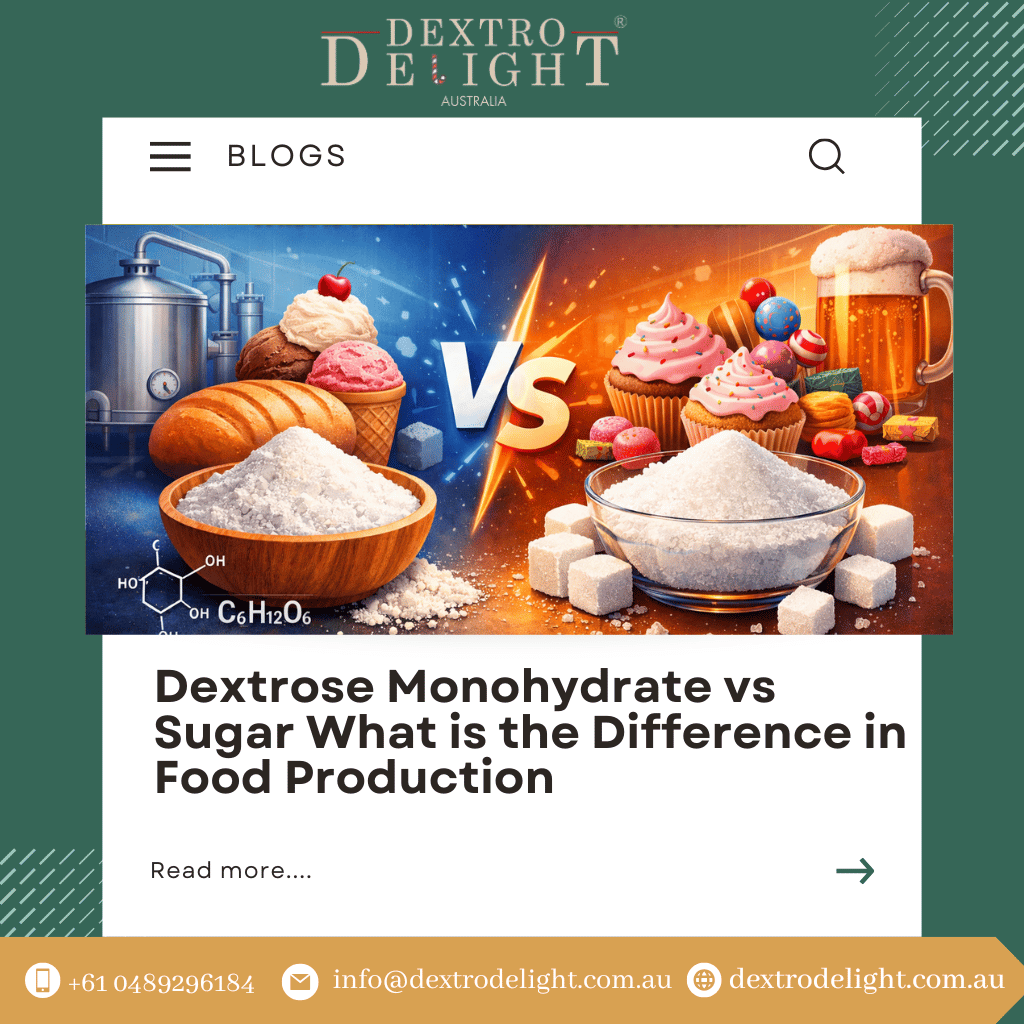
In modern food manufacturing, choosing the right sweetener shapes everything from how well the product runs through your factory to how long it sits on a shelf to how it feels in your mouth.
And, it seriously affects the price tag and how your product looks on the label. So if you’re a food manufacturer Australia, getting the difference between dextrose monohydrate and sucrose (regular sugar) makes all the difference in coming up with recipes that actually work at scale.
With everyone chasing ingredients that are more functional, budget-friendly, and clean-label, many businesses are evaluating options from a trusted Dextrose Monohydrate Powder Supplier to replace or complement traditional sugar systems.
Let’s break it down: What’s the practical difference between dextrose and sugar?
Understanding the Basics: Dextrose vs Sugar
At a chemical level, the comparison of dextrose vs sugar comes down to structure and behaviour.
- Dextrose monohydrate is a monosaccharide. Basically, pure glucose is usually made from corn starch.
- Sucrose is the classic table sugar. It is a disaccharide made from both glucose and fructose.
This tiny difference changes everything: dextrose gets absorbed straight away, while your body has to break down sucrose first.
In food systems, that means dextrose reacts faster, delivers a different level of sweetness, and behaves in its own way when you process, bake, or store your food.
Here’s a quick, straight-up comparison manufacturers can use when working out their next recipe.
That’s why you see so many manufacturers rethinking their approach when they weigh dextrose against regular sugar in their products.
Key Functional Differences in Food Production
Here’s a quick, clear comparison that food manufacturers can use during formulation:
| Property | Dextrose Monohydrate | Sucrose (Sugar) |
|---|---|---|
| Structure | Monosaccharide (glucose) | Disaccharide (glucose + fructose) |
| Sweetness Level | ~70–75% of sucrose | Standard (100%) |
| Solubility | Moderate | High |
| Fermentation Speed | Fast | Slower (requires breakdown) |
| Browning Reaction | High (Maillard reaction active) | Lower unless hydrolysed |
| Moisture Retention | High (hygroscopic) | Lower |
| Cost Efficiency | Lower production cost | Higher, depending on cane/beet supply |
| Energy Release | Immediate | Delayed |
This difference explains why many manufacturers are shifting strategies when evaluating dextrose vs sugar across product categories.
How Dextrose Monohydrate Performs in Real Applications?
Dextrose monohydrate shows some clear strengths, especially visible in industrial food production.
-
Faster Fermentation in Bakery Systems
Dextrose is directly consumed by yeast, so the dough rises faster. Proofing times drop by 15–20%, which means bakeries can improve production throughout commercial bakeries.
-
Improved Moisture Retention
One of the key dextrose monohydrate uses is maintaining softness in baked products. Its hygroscopic nature helps retain moisture in bread and cakes. Less staling, better shelf life.
-
Enhanced Browning and Flavour
Dextrose reacts quickly during the Maillard process, so you get a deeper colour and a richer taste in baked or roasted foods.
-
Freezing Point Control in Dairy
Dextrose drops the freezing point lower than regular sugar, so ice cream and frozen desserts come out smoother and easier to scoop.
Where Sugar Still Holds Its Ground?
Despite the growing use of dextrose, there are places where sucrose still fits best.
-
High Sweetness Requirement
Gram for gram, sucrose is sweeter than dextrose. This reduces the total quantity needed, helpful when balance is critical in formulations.
-
Structural Role in Baking
In cakes and cookies, sucrose contributes to aeration during creaming. Sucrose does this better than dextrose, so it’s tough to swap out in recipes that need lift and structure.
-
Confectionery Texture Control
For things like hard candies or fondant, sugar’s ability to crystallise matters. Where texture precision is required, sucrose gives a smooth finish.
For many manufacturers, the decision is not about replacement but optimisation. They’re blending and combining both ingredients to get just the results they want.
Cost and Supply Chain Considerations
Cost has a big impact on which ingredients companies go with. Dextrose usually comes from corn starch, broken down with enzymes, while sucrose mostly comes from sugarcane or sugar beet processing. Looking at industry numbers:
- Dextrose production is 15–30% more cost-efficient than sucrose in many markets
- Corn supply chains are more geographically diversified than sugar crops
- Bulk pricing (approximate):
- Dextrose monohydrate: $400–700 per metric ton
- Sucrose: $600–900 per metric ton
For Australian manufacturers, teaming up with a reliable Dextrose Monohydrate Powder Supplier helps keep prices steady and quality consistent.
Pharmaceutical and Functional Food Advantages
Beyond sweetening, Dextrose is used in pharmaceuticals and functional foods.
- It’s a key ingredient in IV fluids when patients need glucose fast.
- It also plays a role in oral rehydration solutions by helping the body absorb electrolytes.
- It works well as a binder and filler for tablets.
- Athletes and active people rely on sports and energy drinks that use dextrose for quick energy.
According to market projections, the global dextrose market is expected to grow from USD 6.5 billion in 2024 to USD 9.5 billion by 2033, with demand from both the food and pharmaceutical sectors driving that growth.
Clean Label and Consumer Perception
These days, consumer preferences are changing the way companies look at ingredients.
The word “sugar” is getting linked more and more to health worries, while terms like “dextrose” or “glucose” come off as more functional and better-suited for performance products.
Products aimed at sports nutrition or energy tend to highlight dextrose for just that reason.
For Australian brands, this shift supports reformulation strategies aligned with both health trends and regulatory expectations.
Wrap Up
Dextrose monohydrate and regular sugar go far beyond sweetness. They change how you process foods, shape final textures, extend shelf life, and even affect how you market your product. For Businessmen involved in the food industry, understanding these differences leads to better decisions and better products.
If you’re still confused which one to choose, Dextro Delight is here to guide you.
We help businesses with top-quality dextrose options designed for today’s food industry. If you’re searching for a reliable Dextrose Monohydrate Powder Supplier, reach out to Dextro Delight.
Related Posts

How to Effectively Store and Preserve Your Ingredients to Ensure Freshness
How Dextrose Monohydrate Powder is Used in Food Bakery and Beverage Industry
